Kritika Singh

Hazedawn

Designing for one free hand, bad light and thirty seconds.

Role
Sole product designer at Hazedawn
When
2022–2023, five months
Platform
Mobile app, light and dark
Worked with
Product, engineering, field operations, QA

Starting point

Site teams reported problems through WhatsApp threads, uncaptioned photos and handwritten notes. Issues arrived without the detail anyone needed to act on them, and nobody could see what was open, in progress or fixed. The brief was to make reporting digital.

Outcome

A three-step reporting flow built to survive glare, gloves and constant interruption, and one shared record for site engineers, supervisors and operations managers. After rollout, reporting took 40% less time and 30% more follow-ups were completed. Teams moved their issue threads out of WhatsApp on their own, because the app was faster than the group chat.
Two weeks on site changed the brief. Workers already had phones, so going digital wasn't the problem. Every way of reporting cost them a free hand, good light or a spare minute, and they rarely had all three.

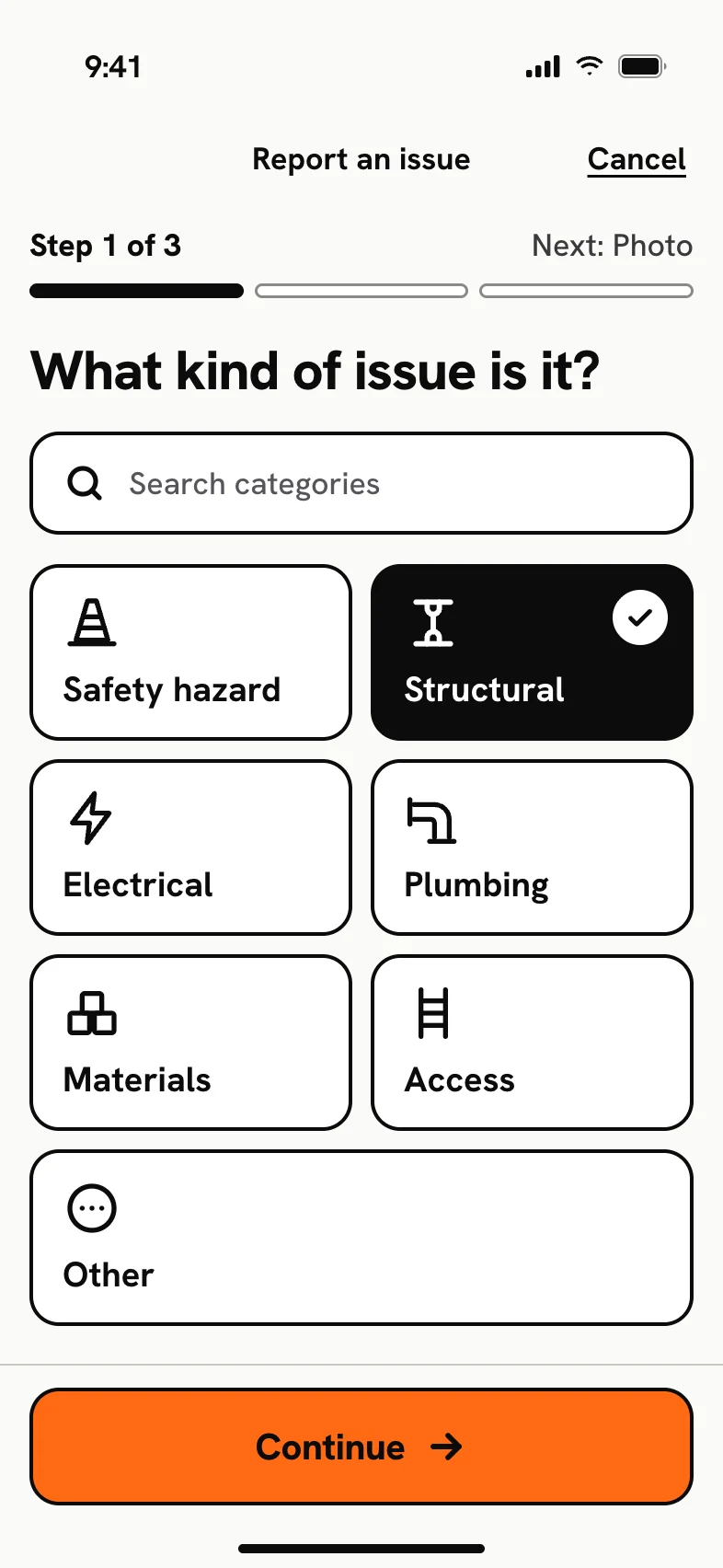
Step 1: choosing an issue category from large icons, with Continue disabled until one is selected.
1Pick a category. Continue unlocks only once you've chosen.
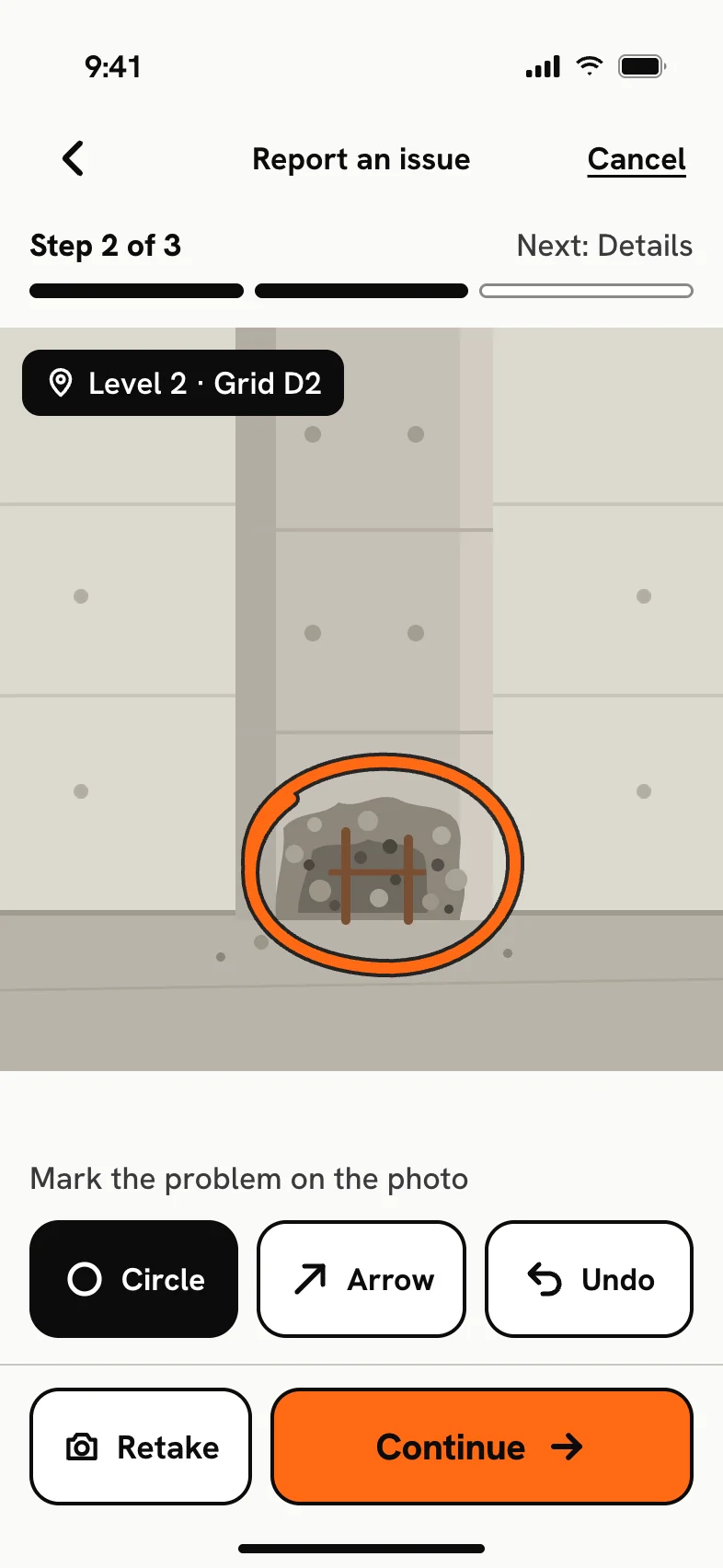
Step 2: a photo of the problem with a circle drawn around the exact spot.
2Take a photo and circle exactly what's wrong.
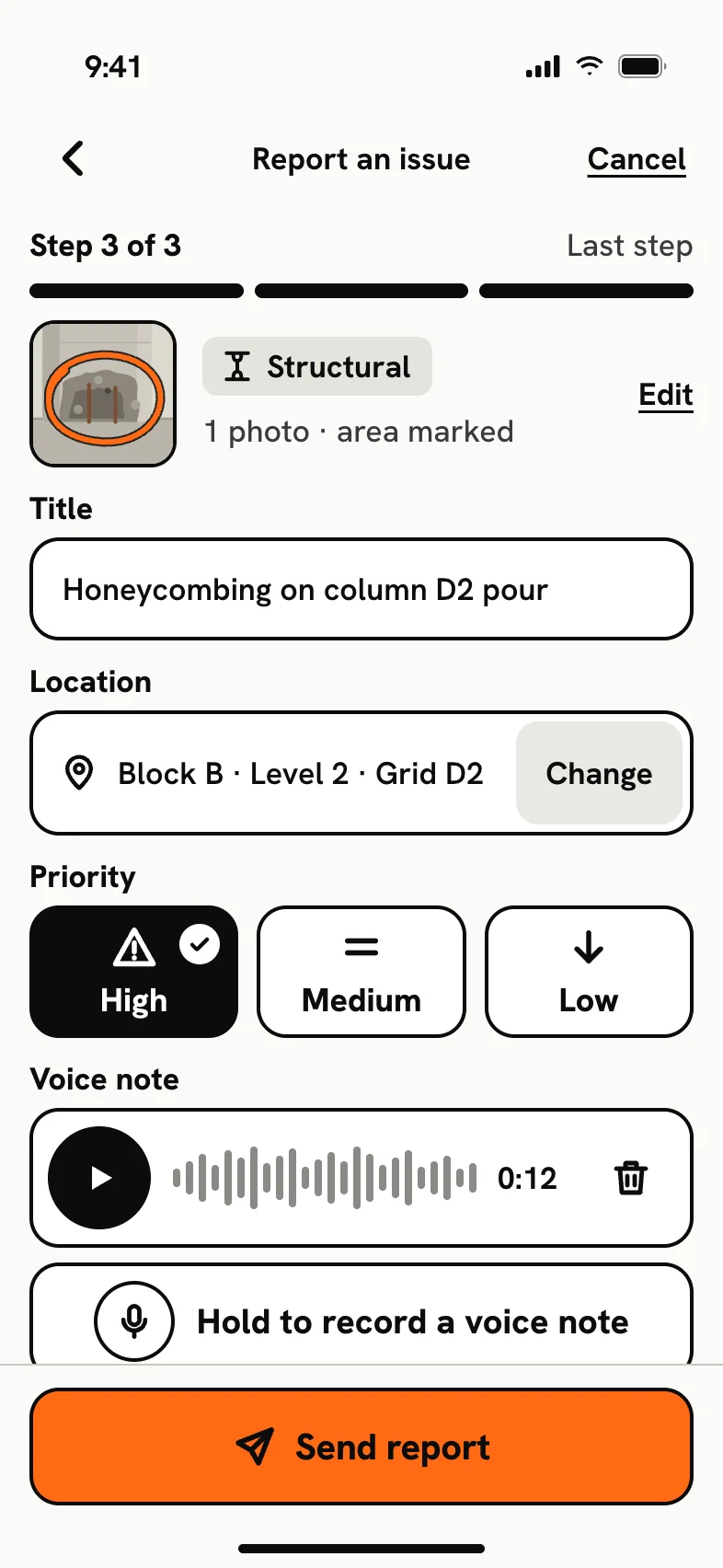
Step 3: title, location, one-tap priority and a button to record a voice note.
3Add details, set priority with one tap, or speak instead of typing.
The whole report takes under a minute, and each screen asks for one decision.

Three site conditions, three design answers

Every screen had to pass one test: does it still work with one hand free, bad light and thirty seconds? I took low-fidelity prototypes onto site and tested them in real conditions before anything was built.

Constant interruption

Workers abandoned long forms the moment someone called them away, and rarely came back.

A guided flow with one decision per screen, so a report survives being put down halfway.

Gloves and full hands

Typing in dust, with gloves on or holding tools, was slow and full of mistakes.

Circle the problem on the photo, and record a voice note instead of typing.

Glare and low light

Light swings from midday sun to early-morning shade within one shift.

Light and dark modes, both tested outdoors and checked against WCAG AA contrast.

One record instead of three

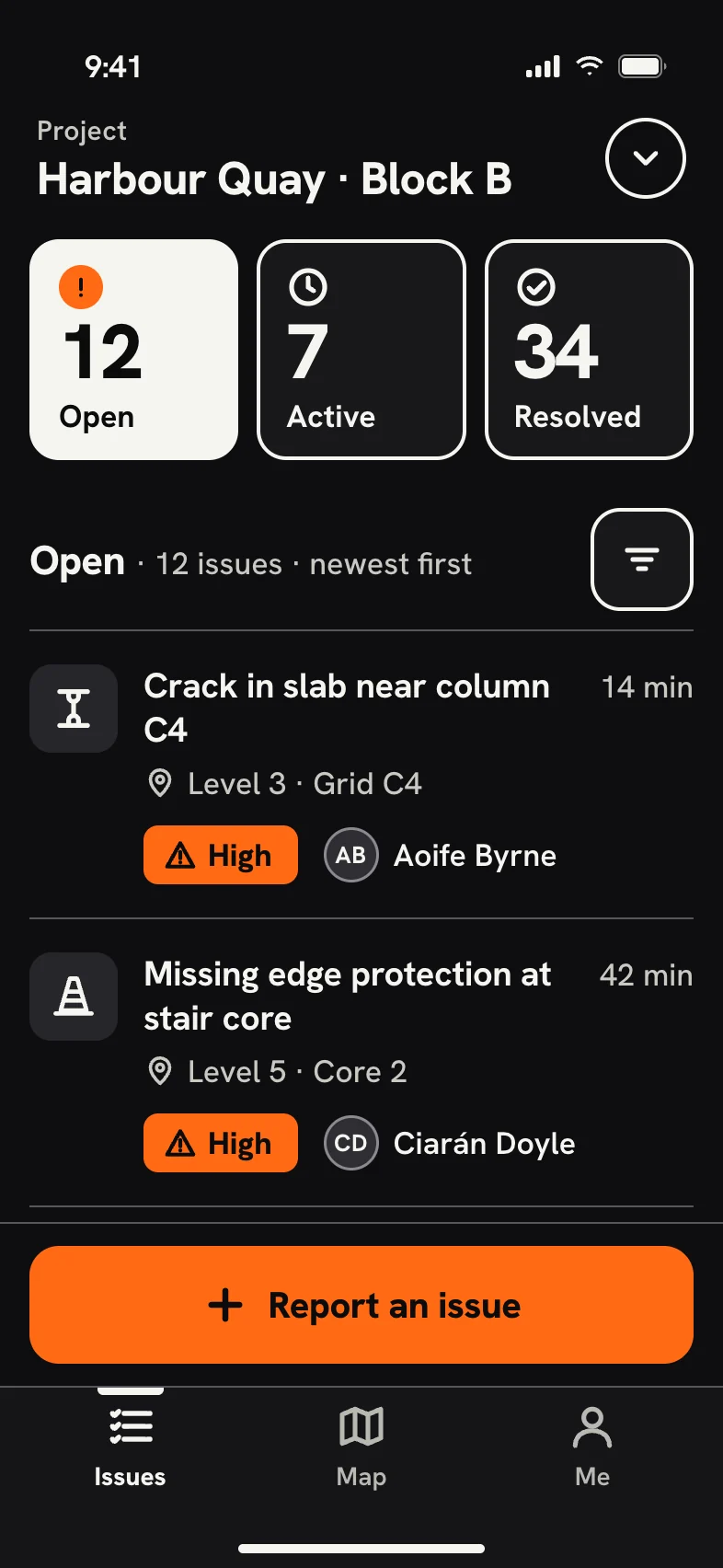
Before, an issue could live in a chat, a camera roll and a notepad at once. Now every report lands in one list everyone shares, sorted into open, in progress and resolved.

Ticket dashboard in light mode with counts of open, in progress and resolved issues. The same ticket dashboard in dark mode.
The dashboard in light and dark mode. Both were tested on site in direct sun, shade and early-morning low light.

What changed after rollout

40%
less time to report an issue
30%
more follow-ups completed
1
shared record, replacing WhatsApp, email and paper
3
roles in one app: site engineers, supervisors, operations managers